

1. Broccoli Microgreens: Your Natural Cellular Defender
Broccoli microgreens aren’t just mini versions of the veg you know — they’re one of the most scientifically researched microgreens for cancer prevention and hormone support. And bonus: they taste amazing. Think ultra-fresh, light broccoli with a mild crunch that makes them as easy to eat as they are powerful.
Here’s why they deserve a place in your daily routine:
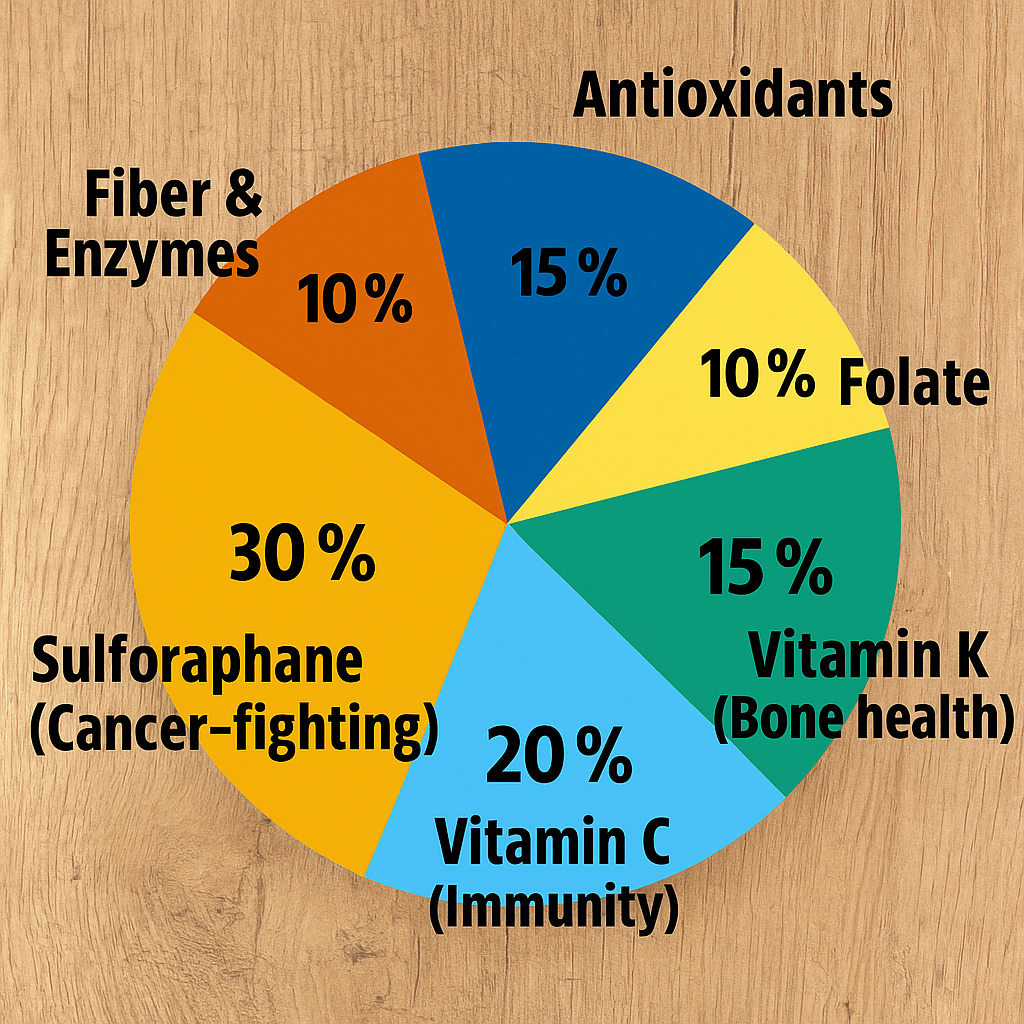
- Ultra-high in sulforaphane — a powerful compound shown in dozens of studies to help prevent cancer by supporting cell detoxification, DNA repair, and apoptosis of damaged cells.
- Supports hormone balance — ideal for pre-menopause and menopause, where natural detox and estrogen metabolism can benefit from broccoli’s phytochemicals.
- Anti-inflammatory & antioxidant — calms the gut, reduces oxidative stress, and supports liver detoxification.
- Immune-boosting vitamin C — contributes to collagen production, skin health, and daily energy.
- Bone-strengthening vitamin K — helps regulate calcium and supports skeletal health.
Clinical Insight: “Sulforaphane in broccoli sprouts has been one of the most promising compounds studied for cancer prevention and overall cellular defense.” — Dr. Jed Fahey, Nutritional Biochemist
“A daily dose of broccoli microgreens can deliver significant antioxidant support and influence gene expression linked to detox pathways.” — Dr. Rhonda Patrick, Biomedical Scientist
Expert Quote: “Broccoli microgreens are my go-to recommendation for patients who want food that actively defends their cells.” — Functional Medicine Practitioner
“Tiny greens, massive benefits — broccoli microgreens should be a kitchen essential.” — Nutrition Author & Educator
Visual Insight:
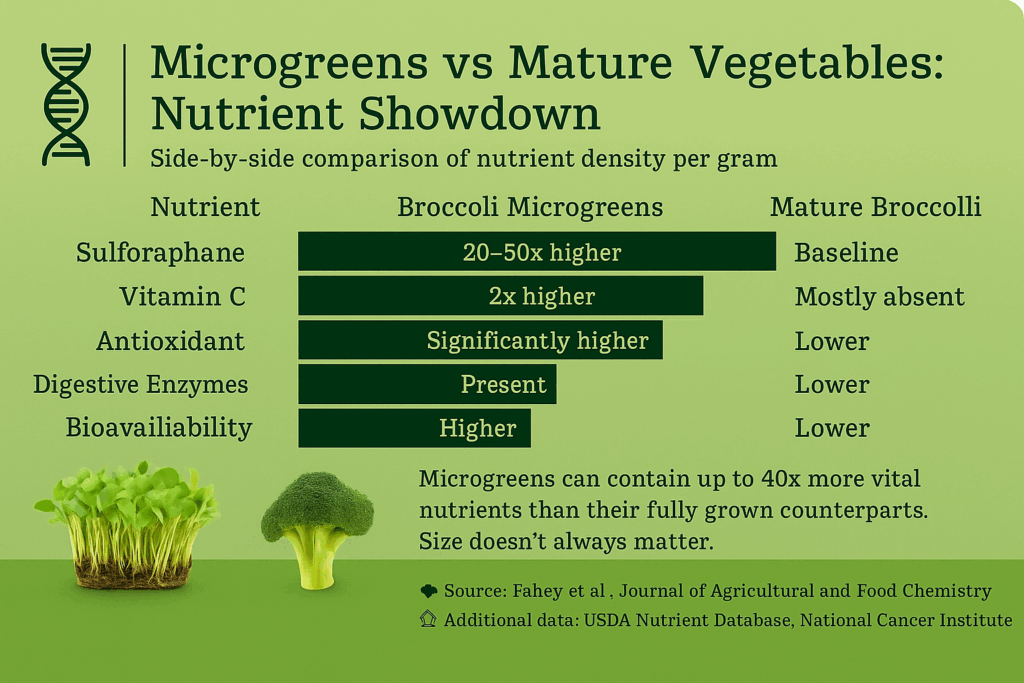
Broccoli microgreens vs. mature broccoli: sulforaphane content, vitamin C, and vitamin K per 100g — highlighting why the microgreens lead the pack.
Mild crunch. Strong science. Everyday armor.
2. Wheatgrass: The Alkaline Cleanser
Wheatgrass is your body’s best mate when it comes to cleansing, healing, and rebuilding. Packed with chlorophyll, enzymes, vitamins, and minerals — this green elixir supports everything from detox to digestion, inflammation to immunity.
Its fresh, sweet-grass flavour is surprisingly smooth and slightly earthy — think of it as nature’s reset button in a shot glass.
Here’s why wheatgrass deserves a daily shot:
- Ultra-rich in chlorophyll — acts like plant-based blood, helping purify your body and energise your cells.
- Anti-inflammatory powerhouse — reduces swelling, joint pain and supports faster recovery.
- Boosts red blood cell production — enhances oxygen flow, energy levels, and physical endurance.
- Supports digestion and detox — natural enzymes and fibre help clear waste and nourish your gut lining.
- Balances pH levels — wheatgrass is one of the most alkaline-forming foods, ideal for counteracting acidic diets.
Clinical Insight: “Wheatgrass juice contains over 100 elements the body needs and is especially powerful in cellular regeneration.” — Dr. Bernard Jensen, Clinical Nutritionist
“The chlorophyll in wheatgrass acts as a detoxifier, removing toxins from the liver and bloodstream.” — Dr. Yoshihide Hagiwara, Japanese Research Scientist
Expert Quote: “A single ounce of wheatgrass juice has the nutritional value of 2.5 pounds of vegetables.” — Ann Wigmore, Holistic Health Pioneer
“Wheatgrass restores alkalinity and mineral balance more effectively than any other plant I’ve studied.” — Dr. Theodore Baroody, Author of ‘Alkalize or Die’
Visual Insight:
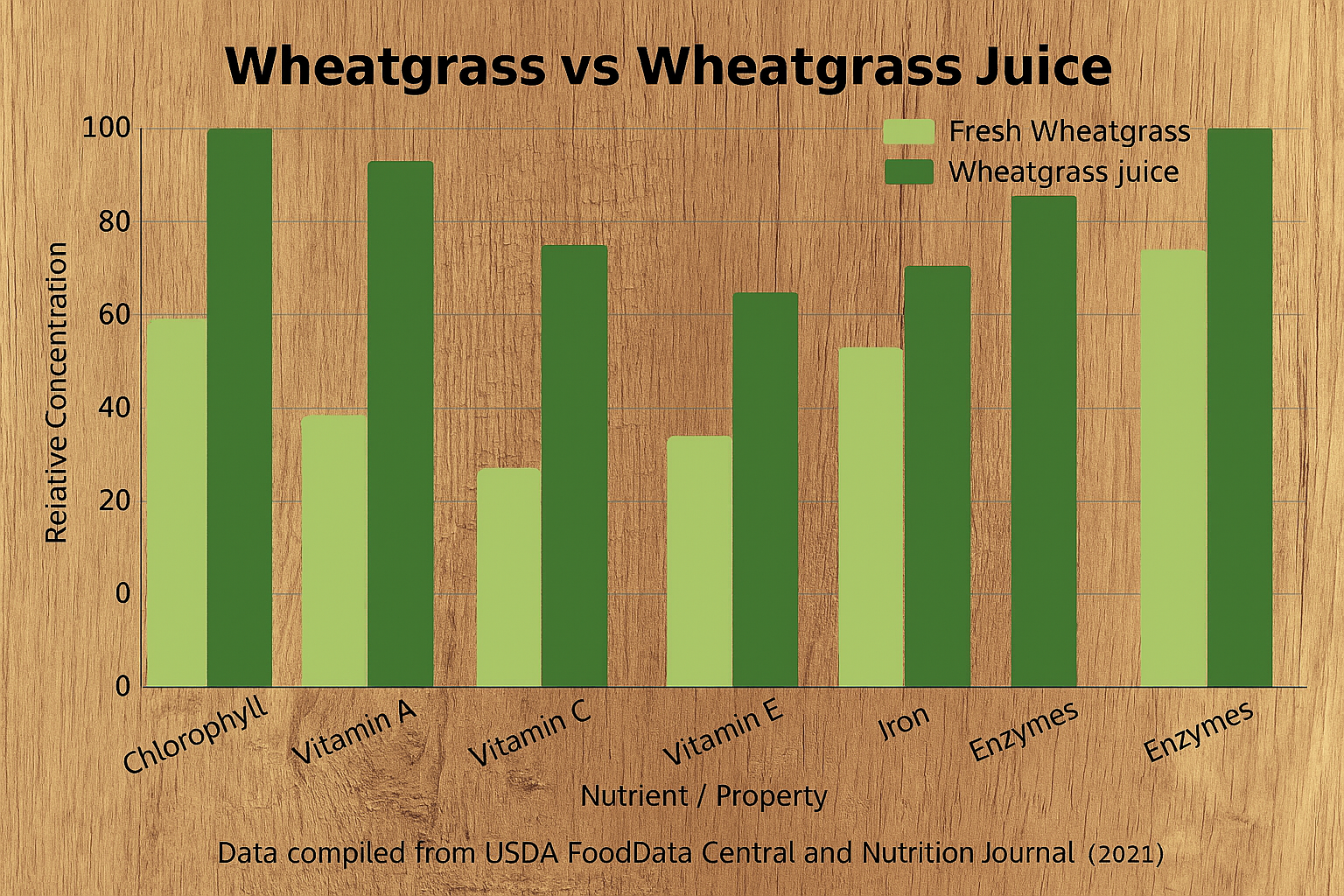
Here’s how wheatgrass stacks up nutritionally — when eaten fresh vs juiced:
3. Sunflower Microgreens: The Plant-Based Protein Powerhouse
Sunflower microgreens aren’t just crunchy and delicious — they’re bursting with complete plant protein, antioxidants, and brain-boosting nutrients. These tiny greens are one of the few microgreens that contain all nine essential amino acids, making them a brilliant daily boost, especially for vegetarians and vegans. And taste-wise? Think fresh, nutty, slightly earthy — like a sunflower seed with a green snap.
Here’s why they deserve a place in your daily routine:
- Complete source of plant protein — contains all essential amino acids needed for cell repair and muscle function.
- Rich in brain-friendly B vitamins — including folate, which supports mood regulation and energy production.
- Loaded with vitamin E — a powerful antioxidant that supports skin health, heart function, and immune resilience.
- Magnesium & zinc content — key minerals for bone health, hormone balance, and nervous system support.
- Supports blood sugar regulation — thanks to their unique fibre and nutrient profile that supports insulin sensitivity.
- Promotes healthy skin & hair — due to high levels of biotin and vitamin E working in synergy.
Clinical Insight: “Sunflower microgreens deliver bioavailable protein and antioxidants in a highly absorbable form, making them ideal for plant-based diets.” — Dr. Michael Greger, Physician & Author of How Not to Die
“Incorporating sunflower microgreens may help reduce inflammation markers and improve cardiovascular function.” — Dr. Michelle McMacken, Internal Medicine Specialist & Lifestyle Medicine Advocate
Expert Quote: “Sunflower microgreens are the ultimate nutrient-dense green — perfect for anyone seeking real food fuel.” — Dr. Mark Hyman, Functional Medicine Pioneer
“These microgreens offer clean, green protein with serious benefits — from your brain to your biceps.” — Rich Roll, Plant-Based Endurance Athlete & Wellness Podcaster
Visual Insight:
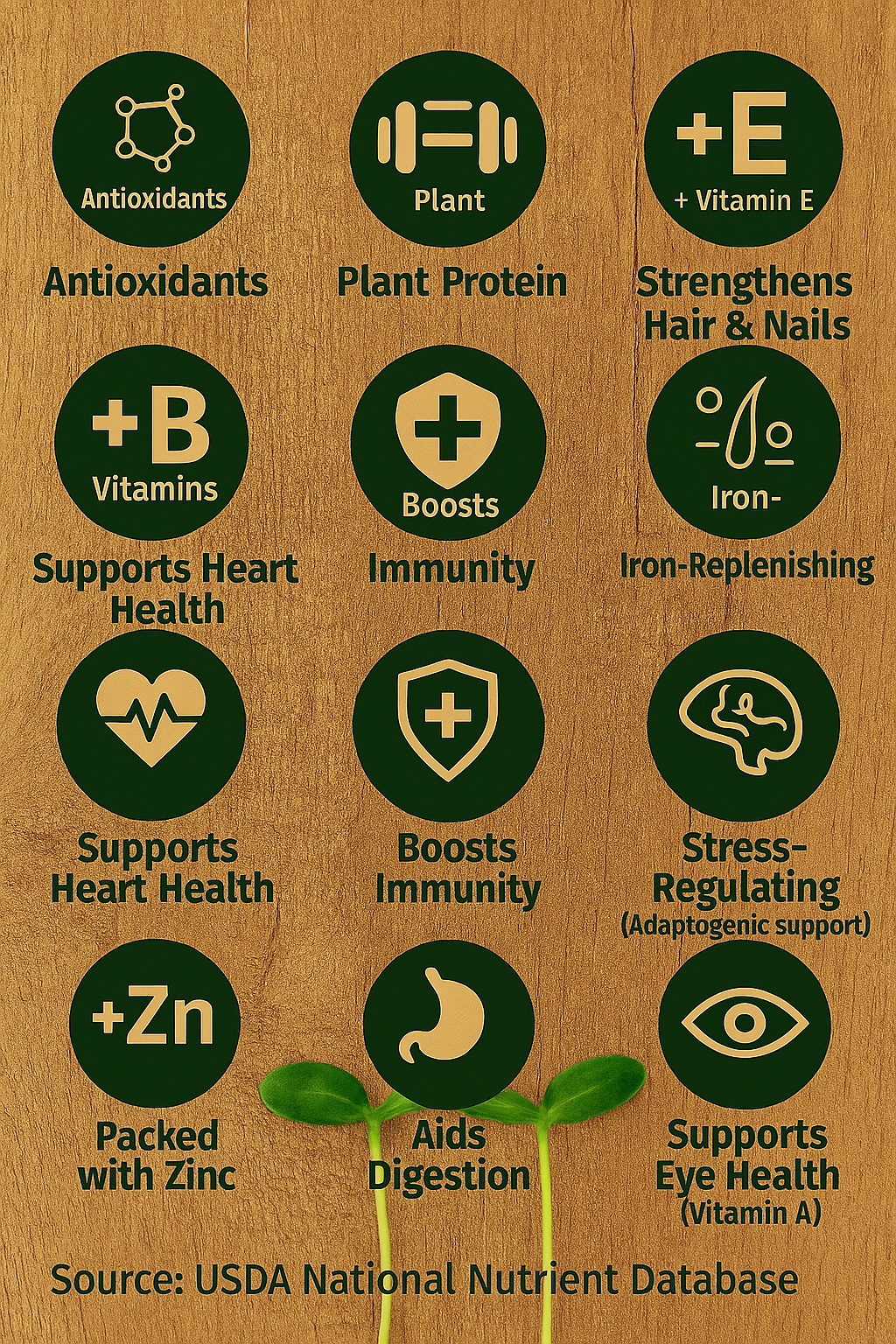
Here’s how sunflower microgreens stack up nutritionally when compared to other leafy greens:
4. Pea Shoots: The Sweet Green Recovery Fuel
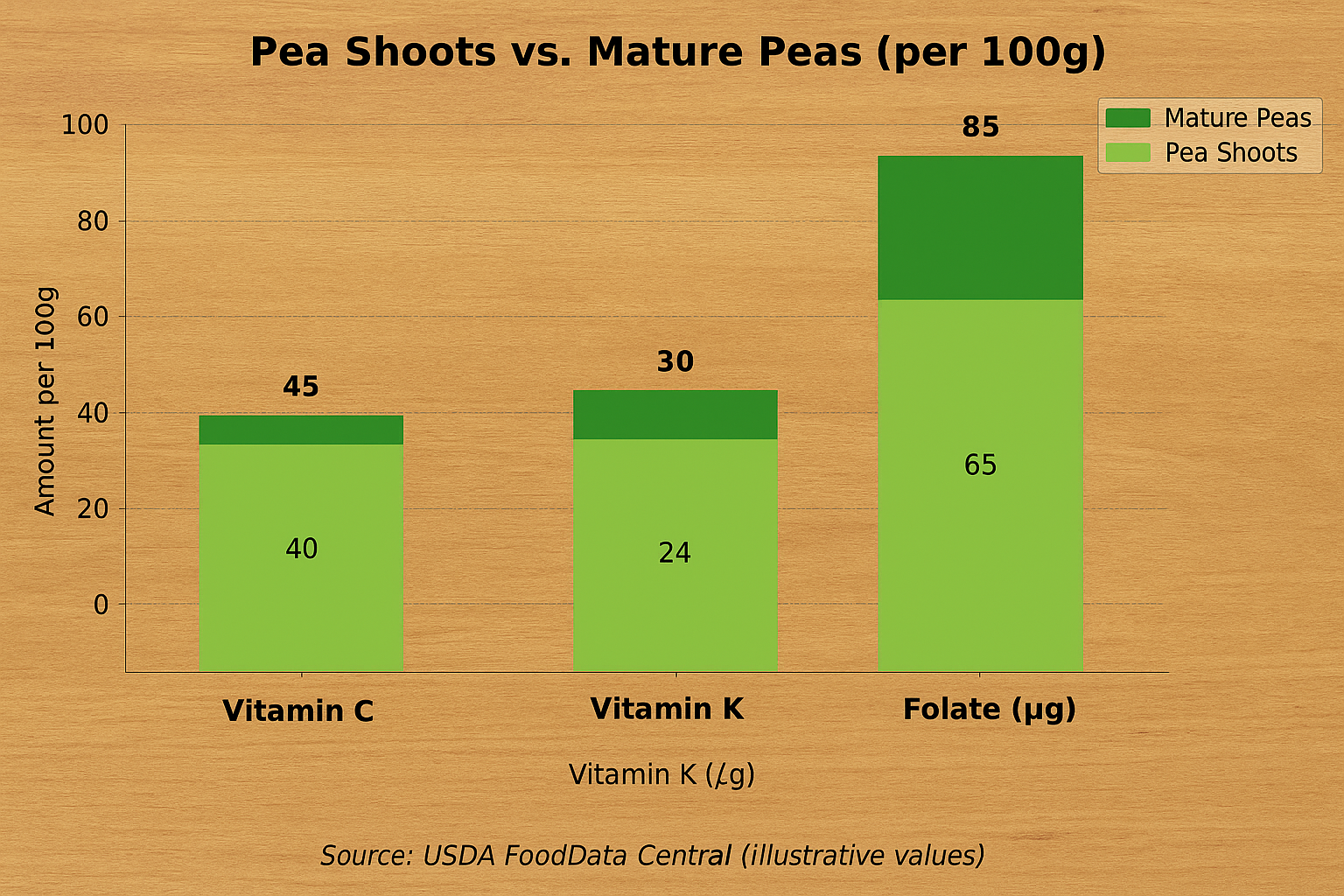
Pea shoots bring clean, light sweetness with a crisp snap—and a serious micronutrient profile. Naturally rich in vitamin C, folate, vitamin K, and plant-based protein, they’re a go-to for daily salads, wraps, and post-training meals. Think fresh garden peas, but brighter and leafier.
Here’s why they earn a regular spot on your plate:
- Protein + vitamin C combo — supports tissue repair and collagen formation after activity.
- High in vitamin K — contributes to bone health and normal blood clotting.
- Folate-rich — essential for cell growth, energy metabolism, and methylation.
- Low-calorie, nutrient-dense — easy volume for weight management without skimping on nutrients.
- Gut-friendly fibre — supports satiety and a healthy microbiome.
- Clean, sweet flavour — upgrades salads, eggs, noodles, and grain bowls without bitterness.
Clinical Insight: “Leafy pea shoots provide vitamins K, C, and folate alongside plant protein—useful for bone support and daily recovery.” — NHS GP & Culinary Medicine Advocate
“Increasing non-starchy greens like pea shoots helps improve diet quality and fibre intake—key for metabolic health.” — Registered Dietitian
Expert Quote: “Pea shoots are an easy win: sweet, crisp, and loaded with the nutrients most plates are missing.” — Performance Nutrition Coach
“Think of them as your daily ‘green insurance’—fast, fresh, and highly versatile.” — Chef & Menu Developer
Visual Insight:
Pea Shoots vs. Mature Peas: vitamin C, vitamin K, and folate per 100g—showing why the shoots punch above their weight.
Sweet crunch. Big numbers. Zero faff.
5. Radish Microgreens: The Spicy Antioxidant Boost
Radish microgreens aren’t shy — they bring a peppery kick and a surge of health benefits. These fiery little greens are rich in antioxidants, vitamin C, and compounds that support liver detoxification and heart health. Their bold taste and bold nutrition make them a favourite for adding zest to salads, wraps, and grain bowls.
Here’s why they deserve a place in your daily routine:
- Rich in glucosinolates — compounds shown to support detoxification and cancer prevention.
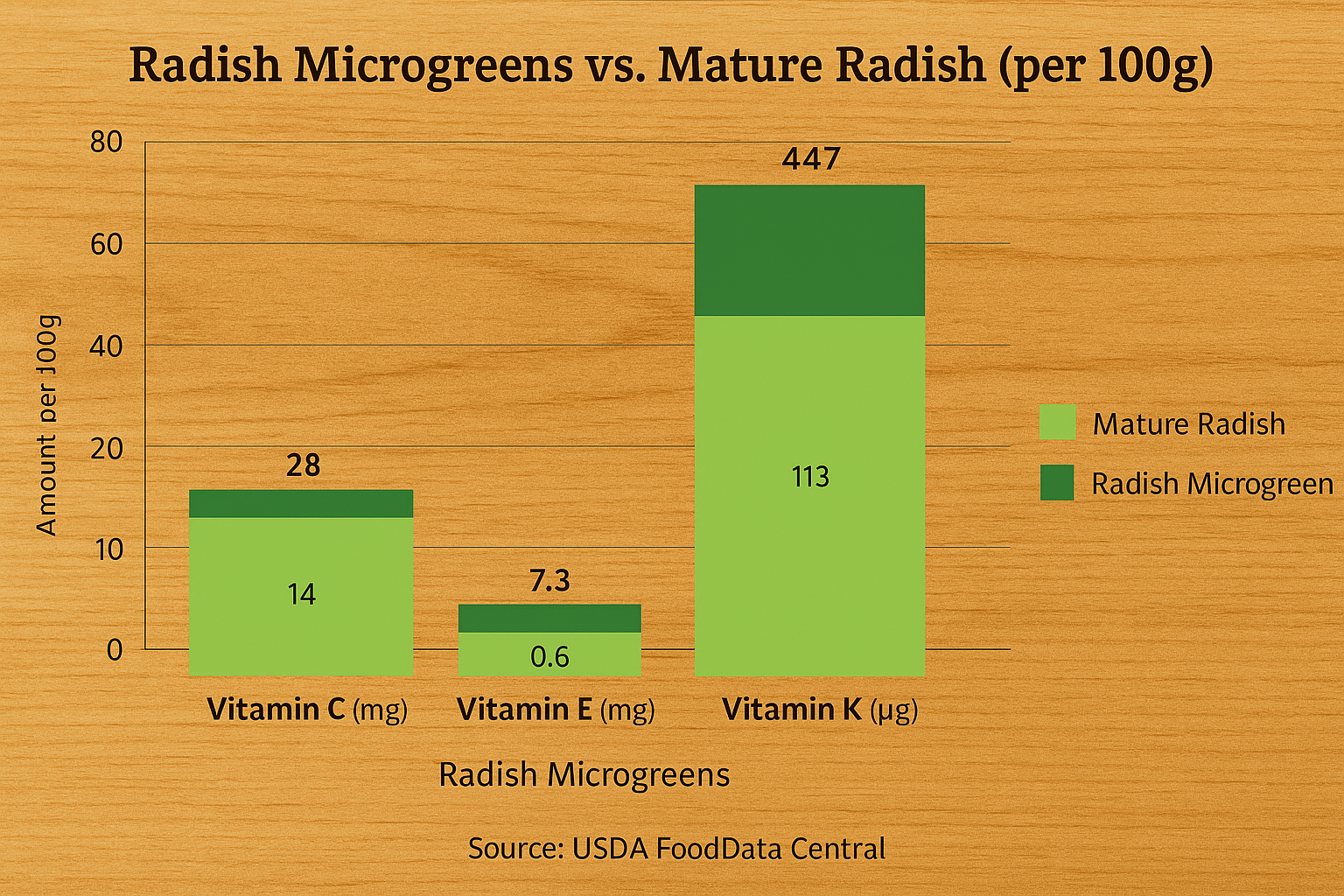
- Vitamin C powerhouse — boosts immune defence and collagen production.
- High antioxidant activity — helps fight oxidative stress and cellular damage.
- Supports healthy digestion — with natural enzymes that aid gut health.
- Liver support — compounds in radish microgreens may promote natural detox pathways.
- Peppery punch — adds a natural spice and crunch to elevate simple meals.
Clinical Insight: “Radish microgreens demonstrate potent antioxidant properties, which may help reduce inflammation markers and oxidative stress.” — Dr. Andrew Weil, Integrative Medicine Specialist
“These microgreens contain glucosinolates that can activate detox enzymes and support liver function.” — Dr. Michael Greger, Physician & Author of How Not to Die
Expert Quote: “Radish microgreens are the zestiest way to sneak antioxidants into everyday meals.” — Chef & Culinary Educator
“Spicy, crunchy, and nutrient-dense — radish microgreens are a chef’s dream.” — Nutrition Consultant
Visual Insight:
Radish microgreens vs. mature radish root: higher antioxidant activity, vitamin C, and glucosinolate content per 100g.
Spice it up. Eat it fresh. Feel the burn (the good kind).